27% of Small Businesses Still Don't Have a Website. Here's What They're Missing.
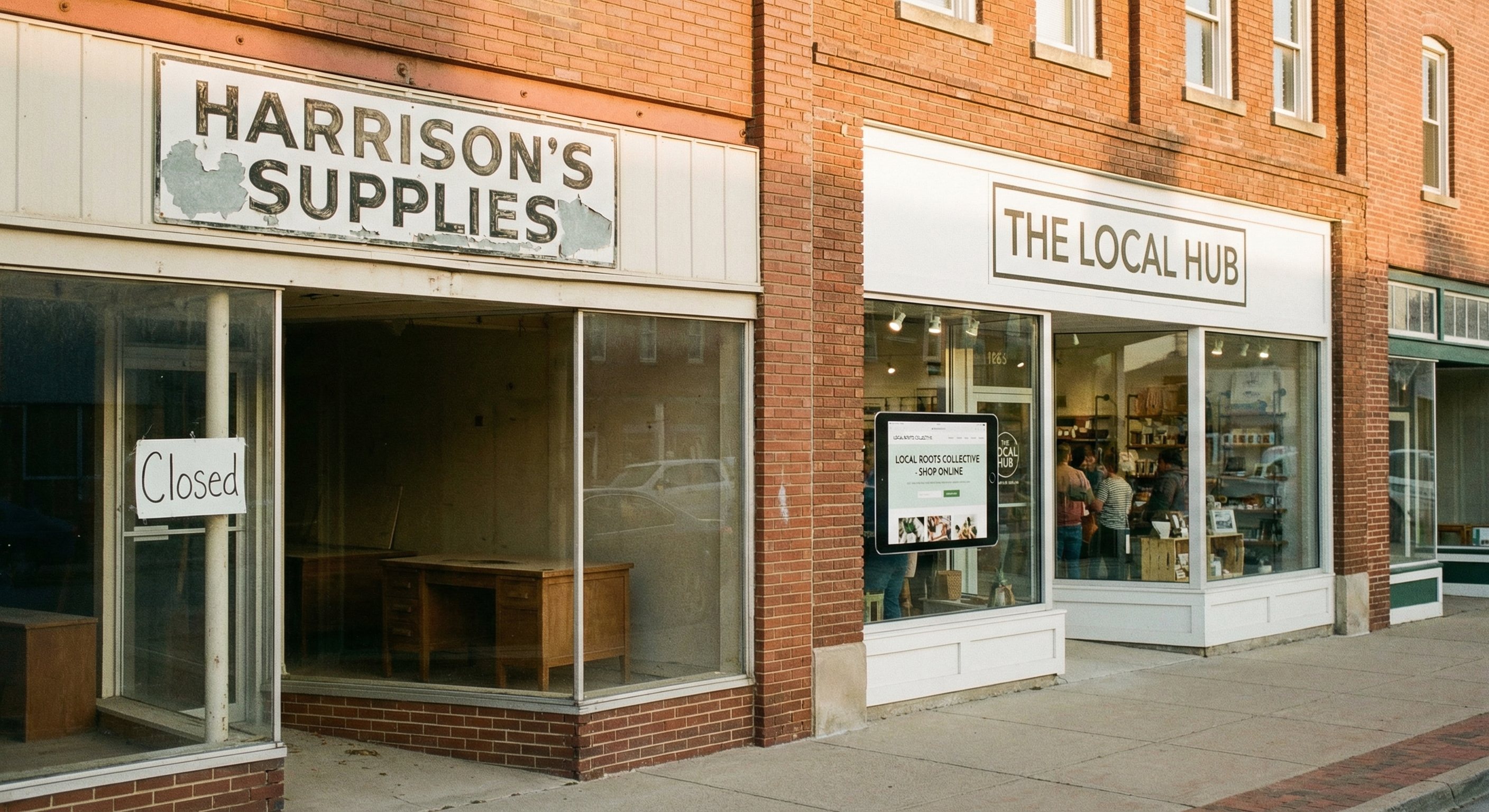
More than one in four small businesses has no website. In 2026, that's not a gap — it's a liability. Here's what happens when customers can't find a business online, and what a credible web presence actually requires today.
The Number That Should Concern Every Small Business Owner
According to research from Smart Soft Solutions published in 2025, roughly 27% of small businesses in the United States operate without a website. That figure has remained stubbornly high for years, even as the internet has become the default starting point for virtually every purchasing decision consumers make.
The reasons businesses give are familiar: it feels expensive, it seems complicated, a Facebook page seems like enough, or the business has survived on word of mouth for years. Those arguments made more sense in 2012. They make far less sense now — and the landscape shifted decisively again over the past 18 months as AI-powered search tools changed how people find local and regional service providers.
The cost of being invisible online is no longer theoretical. It shows up in calls that never happen, quotes that never get requested, and customers who quietly go to a competitor who was simply easier to find.
27% of small businesses in the United States have no website — meaning more than one in four are effectively invisible to any customer who starts their search online. (Smart Soft Solutions, 2025)
What Customers Actually Do When They Can't Find a Business Online
Consumer behavior research paints a clear picture of what happens in the seconds after someone can't confirm a business exists online. They move on. They don't pick up the phone to call a number they found on a random directory listing. They don't drive by the location to see if it's real. They open a new tab and find someone else.
A study from Stanford University found that 75% of consumers admit to making judgments about a company's credibility based on its website design alone. The implication is significant: not only does a business without a website lose credibility — it has no opportunity to establish credibility in the first place. The conversation ends before it starts.
For service businesses in particular — plumbers, landscapers, accountants, consultants, therapists, contractors — the absence of a website creates a specific kind of friction. These are purchases where trust matters enormously and buyers invest real time in vetting their options. A business that can't be vetted is a business that gets skipped.
75% of consumers judge a company's credibility based on its website design. For businesses with no website at all, that judgment arrives instantly — and it isn't favorable. (Stanford Web Credibility Research)
AI Search Has Raised the Stakes Considerably
Google's search experience has changed significantly since 2024. AI Overviews now appear at the top of results for the majority of informational and local queries, synthesizing answers directly on the results page. Tools like ChatGPT, Perplexity, and Google's Gemini are increasingly used as the first stop for product and service research.
All of these systems share a common dependency: they surface businesses that have a crawlable, indexable web presence. A business with no website produces no data for these systems to work with. It cannot appear in an AI-generated summary of local service providers. It cannot be cited when a user asks an AI assistant which HVAC company in their city has the best reviews. It simply doesn't exist in the information layer these tools draw from.
Word of mouth still works. Existing relationships still drive referrals. But the ceiling on growth for a business without a website is getting lower, not higher, as more of the discovery process moves through digital channels that have no record of the business existing.
Why "We Have Social Media" Isn't a Substitute
Many of the small businesses operating without a website are not operating without any online presence. They have a Facebook page, or an Instagram account, or a profile on Google Business. Those are useful — but they are not substitutes for a website, and treating them as such creates real vulnerabilities.
Social media platforms own the relationship between a business and its audience. Algorithms change, reach declines, accounts get restricted, platforms fall out of favor. Facebook's organic reach for business pages has dropped dramatically over the past decade. A business that built its entire digital presence on a single platform has no fallback when that platform's dynamics shift.
A Google Business profile is valuable for local pack rankings, but it surfaces limited information, gives the business minimal control over presentation, and links out — ideally to a website. Without a website to link to, that profile is a dead end rather than the beginning of a conversion journey.
A website is the one digital property a business actually owns. It's the only place where the full story can be told on the business's own terms — services offered, geography served, credentials held, problems solved, trust signals displayed.
What a Minimum Viable Web Presence Actually Looks Like
The good news is that a credible, effective website for a small service business doesn't require months of work or an enterprise budget. The minimum viable version is simpler than most business owners assume, and it accomplishes the primary job: convincing a skeptical visitor to make contact.
At minimum, a service business website needs to answer five questions clearly and quickly: What does this business do? Who does it serve? Where does it operate? Why should a customer trust it? How do they get in touch? Everything else is an enhancement. A site that answers those five questions with clean design, fast load times, and a working contact form is doing the essential work.
Practically, that means a homepage with a clear headline and service description, a services page that explains the specific offerings and who they're for, a contact page with a form and phone number, and a handful of trust signals — client logos, a Google review widget, photos of actual work, or brief testimonials. Five pages, properly built and indexed, outperforms a twenty-page site that loads slowly and buries the contact information.
Performance matters more than it used to. Google's Core Web Vitals have been a ranking factor since 2021, and the correlation between page speed and conversion rate is well documented. A site that takes more than three seconds to load loses a significant share of its visitors before those visitors have seen a single word. The technical baseline has risen, which means template-built sites on older platforms are underperforming more than their owners realize.
A five-page website — homepage, services, about, contact, and one trust-building page — is enough to establish credibility, rank for local searches, and give AI search tools something to work with. The bar for entry is lower than most business owners assume.
The Window for Easy Gains Is Still Open — But Not Forever
In competitive markets, establishing a solid web presence earlier compounds over time. Domain authority, backlink profiles, and indexed content accumulate gradually. A business that builds a well-structured, fast, content-rich website in 2026 starts that compounding process now. A business that waits another two years starts two years later — in a market where competitors have had two more years to build.
In less competitive local markets, the opportunity is even more immediate. Many service businesses in smaller metros and regional markets have weak web presences or outdated sites. A business that builds something solid — fast load times, clear copy, proper technical SEO, genuine trust signals — can rank well for local searches within months, simply because the competition for those rankings is thin.
The 27% of small businesses with no website are not all in the same situation. Some operate in referral-heavy niches where digital presence matters less. Some are actively planning to build. Some have been putting it off for years and are watching newer competitors pull ahead. For most of them, the calculation has already tipped — the cost of continuing to wait exceeds the cost of building something that works.
That calculation only moves in one direction from here.
Ready to Build a Web Presence That Actually Works?
Adapt Studios builds fast, conversion-focused websites for small and mid-sized businesses. Find out what a properly built site could do for your visibility and lead flow.
Get a Free Consultation